EnglishEspanol
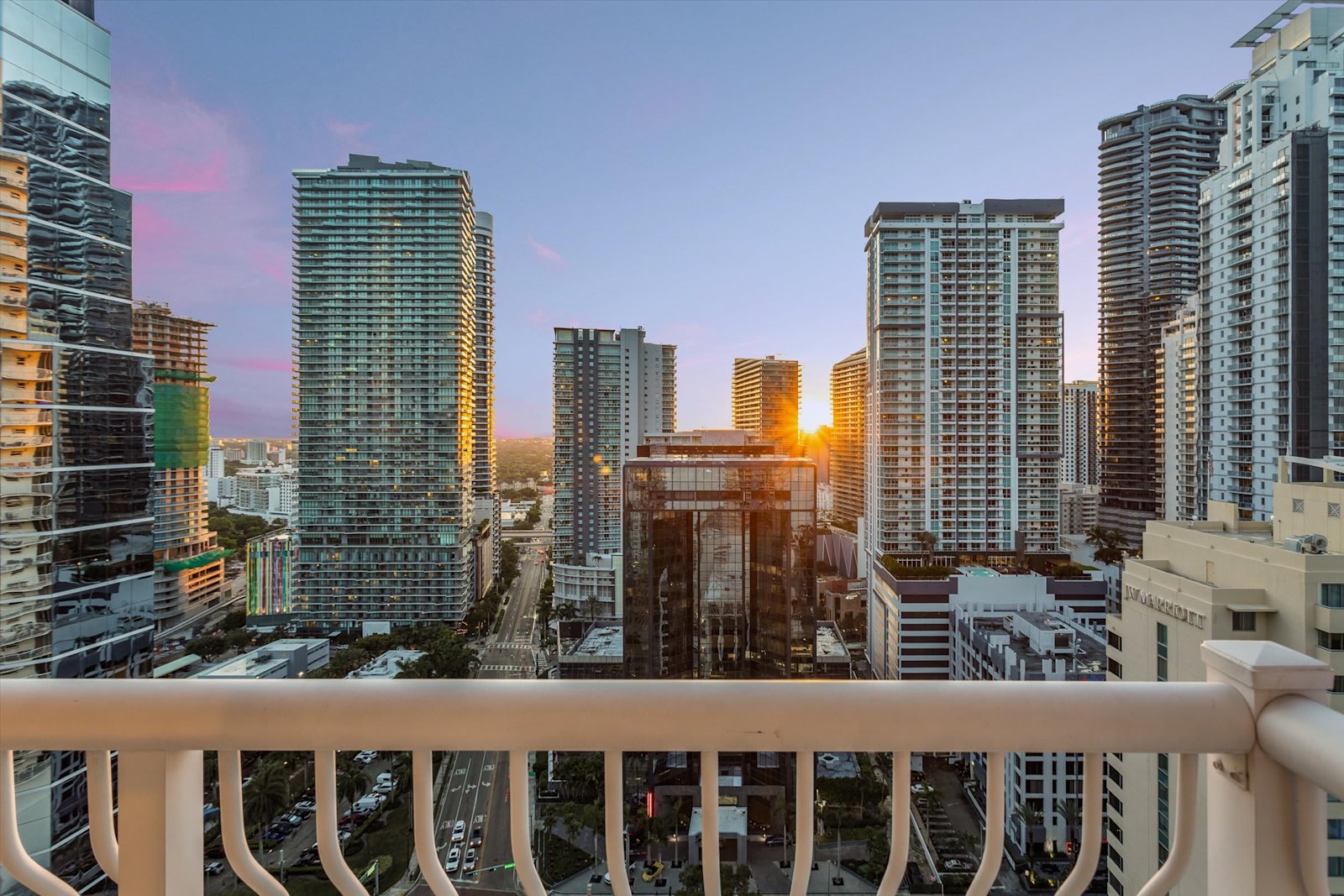
Brickell skyline seen from a managed unit

How we analyze a Miami investment: sources, rules, limits

Every number BlueBay Brokers publishes comes from a named source and carries the date we read it: asking prices and closed sales from the Miami MLS (Bridge Data Output, SEFMLS), recorded deeds from Miami-Dade County, rental rules from the city's own ordinance, and operating income only from units Property Management Brickell actually runs. We print medians, never averages, and a short-term rental status only with its ordinance. Below: the sources, the six rules, the simulator's exact formulas and defaults, and how to check our work with your own AI assistant.

Written by Steve Gabison, Florida broker BK3411036. Updated 18 October 2026.

The sources

Six sources, and what each cannot tell you

A source is useful for one question. The column on the right is where it stops, which is where most published numbers go wrong.

SourceWhat we take from itWhat it cannot tell you
Miami MLS (Bridge, SEFMLS)Asking prices, closed sales, days on market, listing remarksDeveloper sales recorded off the MLS; the rental rule (a remark is the seller's claim)
Miami-Dade County deeds and Property AppraiserRecorded sale prices, developer sales included; folios; recorded living areaIncome; the rental rule
City codes and Florida Statute 509.032(7)(b)Whether a city may prohibit short stays, from the ordinance and its adoption dateWhether one building or one parcel allows them
Miami-Dade County GISThe zoning district or transect of a parcel, its assigned schoolsThe condominium association's rules
Property Management Brickell ledgerReal gross payouts and nights booked, on units it runsThe market as a whole
AirDNAMarket averages, used only as the simulator's starting values and labelled as suchWhat a given unit will earn

The rules we write by

Six rules, applied to every page

Medians, sales only

One waterfront trophy drags an average; a median does not. Leases are removed before any price is counted: in some cities one single-family record in two is a lease.

Every number has a date

"Read on 12 October 2026", never "recent". The measured zone pages are refreshed from the MLS every Monday, and each block states its own date.

No trend under five sales

Below five closings we print the level and withhold the percentage change: one sale is noise wearing a percent sign.

The rental rule has four levels

The city, then the zoning district, then the parcel, then the association. We read the ordinance and its adoption date, and we never certify that a rental is legal at an address.

Income is ours or not printed

The only operating figures we publish come from Property Management Brickell's own ledger. A market ADR is not income, and we do not present it as such.

Honest yields

Most Miami condos show a cap rate of 3 to 5 percent at today's prices on real revenue. Financing, including seller financing, is shown separately, never folded into the yield.

What we never claim: that a short-term rental is legal at an address; a market median or average as your income; a yield the ledger does not support; a fine amount from a code (it is a ceiling, not a sum due); a client's or an owner's name; a developer's price list as a market price.

The simulator, exactly

What it reads, what it assumes, where it stops

ItemRule or default
Listing dataFrom the MLS number: price, association fee (converted to monthly), annual property tax, living area, bedrooms, bathrooms
Short-term revenueDaily rate × occupancy × 365. Starting values are AirDNA market averages of May 2026: Miami Beach $366 at 51%, Brickell and Miami $277 at 56%, Doral $180 at 65%. Replace them with a measured figure; we give ours for a comparable unit we manage
Short-term costsAn operating ratio of 30% of revenue by default (cleaning, platform fees, utilities, supplies; raise it to include management), insurance $200 a month, association fee and property tax from the MLS
Long-term rentLiving area × rent per square foot per month (Miami Beach $4.20, Brickell $3.80, Miami $3.20, Doral $2.40), vacancy 8%, maintenance reserve 1% of the price a year
Financing30-year amortization with a balloon after 5 to 15 years (default 10), 30% down and 5.5% by default: works for a bank loan, a credit line or a seller-carried note
ResultsMonthly payment; cash flow after debt, association fee, tax and insurance; cap rate = (net revenue − association fee − tax) ÷ price; the down payment and the revenue at which it breaks even; for seller financing, the note's present value at 7% against a cash sale net of a 6% commission
Not includedThe reassessment after purchase (the tax shown is the seller's current bill and usually rises after a sale), the transient rental taxes the guest pays on top of the rate (13% in most of Miami-Dade, more in Miami Beach), income tax, furniture and major repairs

Formulas as coded in /simulator on 18 October 2026. The simulator shows a scenario from the numbers you enter, not a forecast of what a property will earn.

Check us with your own AI

Do not take our word for it, ask your assistant

Every study and every question page carries a "Challenge this analysis" bar that opens ChatGPT, Claude or Perplexity on that page, with a prompt asking it to check our numbers and our sources and to list what could make the analysis wrong.

Machine-readable versions sit next to the pages: llms.txt (the map of the site) and llms-full.txt (the full text of the guides), a Markdown copy of every new-development study (add .md to its address), and the datasets behind the zone pages, free to download with their read dates at bluebaybrokers.com/data.

Or plug our data into your assistant directly: add https://bluebaybrokers.com/mcp as a custom connector in Claude (Settings, Connectors) or any client that speaks the Model Context Protocol. Five read-only tools answer from the same files: the measured zones, the rental rule of a city, the new developments with their entry price, any study, any guide.

Reuse is welcome with attribution to BlueBay Brokers and to the source named in each row; MLS figures remain © SEFMLS.

Questions we are asked

Where do BlueBay Brokers' numbers come from?

From the Miami MLS through Bridge Data Output (asking and closed prices), Miami-Dade County recorded deeds (developer sales included), each city's own ordinance (the rental rule), the County GIS (zoning and schools) and Property Management Brickell's booking ledger (operating income on units it runs). Every figure carries its read date.

Is the simulator's revenue a projection?

No. Its starting daily rate and occupancy are AirDNA market averages of May 2026, labelled as such. They are a starting point to replace with a measured figure; we provide ours for a comparable unit we manage.

How do you decide whether a building allows Airbnb?

We read four levels in order: the city's ordinance and its adoption date (Florida Statute 509.032(7)(b) protects only rules adopted on or before 1 June 2011), the zoning district, the parcel, then the condominium declaration. We never certify that a rental is legal at an address.

Can I use your data in my own analysis or AI tool?

Yes, with attribution. The zone datasets are free CSV files at bluebaybrokers.com/data, the site map for AI assistants is at /llms.txt, and every new-development study has a Markdown copy.

Full analysis · 24h

Send us a listing, get the sources back

Tell us which property you are looking at. Steve answers within 24 hours with the full analysis: closed comparables, the rental rule read in its ordinance and, where we manage a comparable unit, what it actually earned.

Your analysis

No spam, ever. Used only to answer you.

Rather talk it through?

Write to Steve on WhatsApp with the MLS number or the address. He answers with the numbers and where they come from.

Talk to Steve on WhatsApp Open the simulator